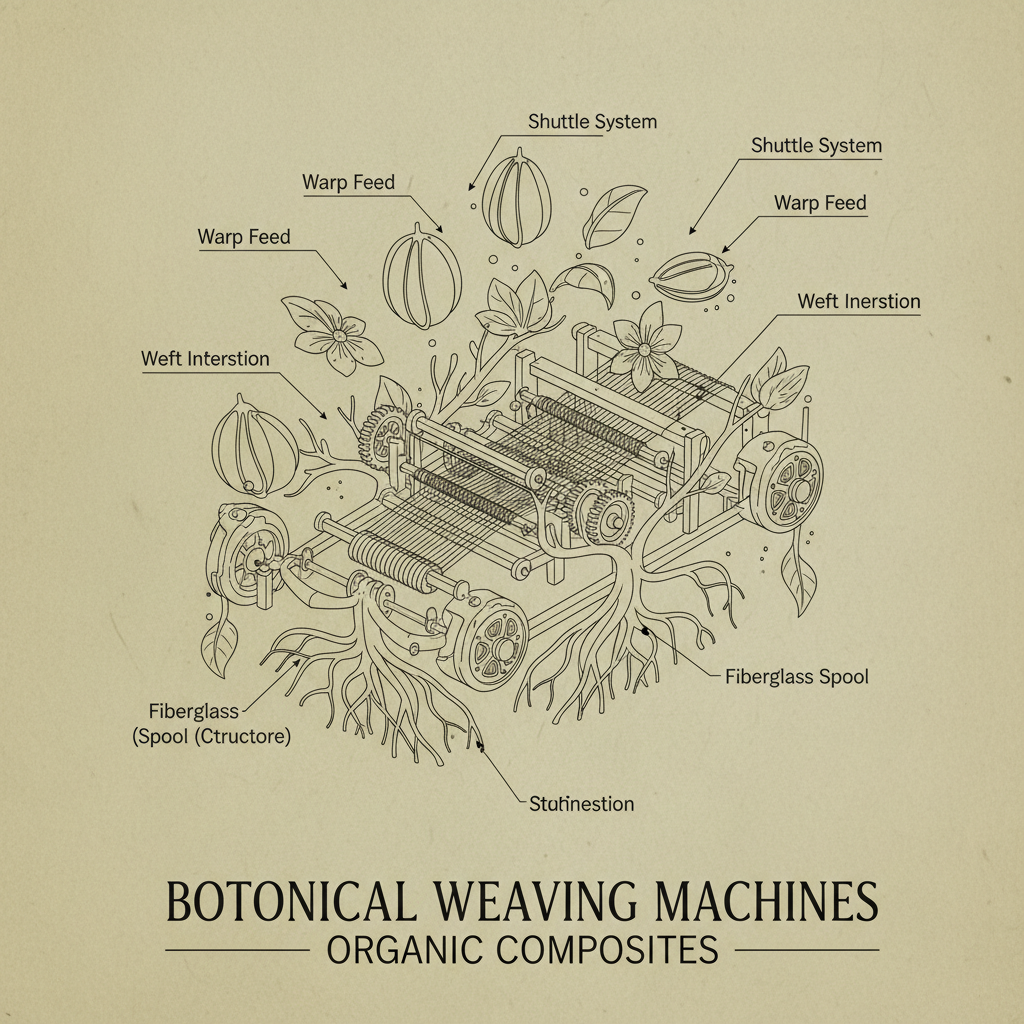
Look, fiberglass mesh production line stuff... it's been a whirlwind lately. Everyone's chasing higher tensile strength, smaller apertures, you know, the usual. But honestly, the real trend isn’t just better mesh, it’s faster production and lower waste. I've seen so many guys try to push the limits on speed and end up with a tangled mess. It's not glamorous work, trust me. You spend enough time smelling that resin, and you start to question your life choices.
Have you noticed how everyone's obsessed with automation now? It’s good, don’t get me wrong. Less back-breaking work. But it’s also a minefield of potential problems. Getting the tension right during weaving? That's where the art is. Too much, and you get brittleness. Too little, and it's floppy. Seems simple, right? It’s not. Not even close.
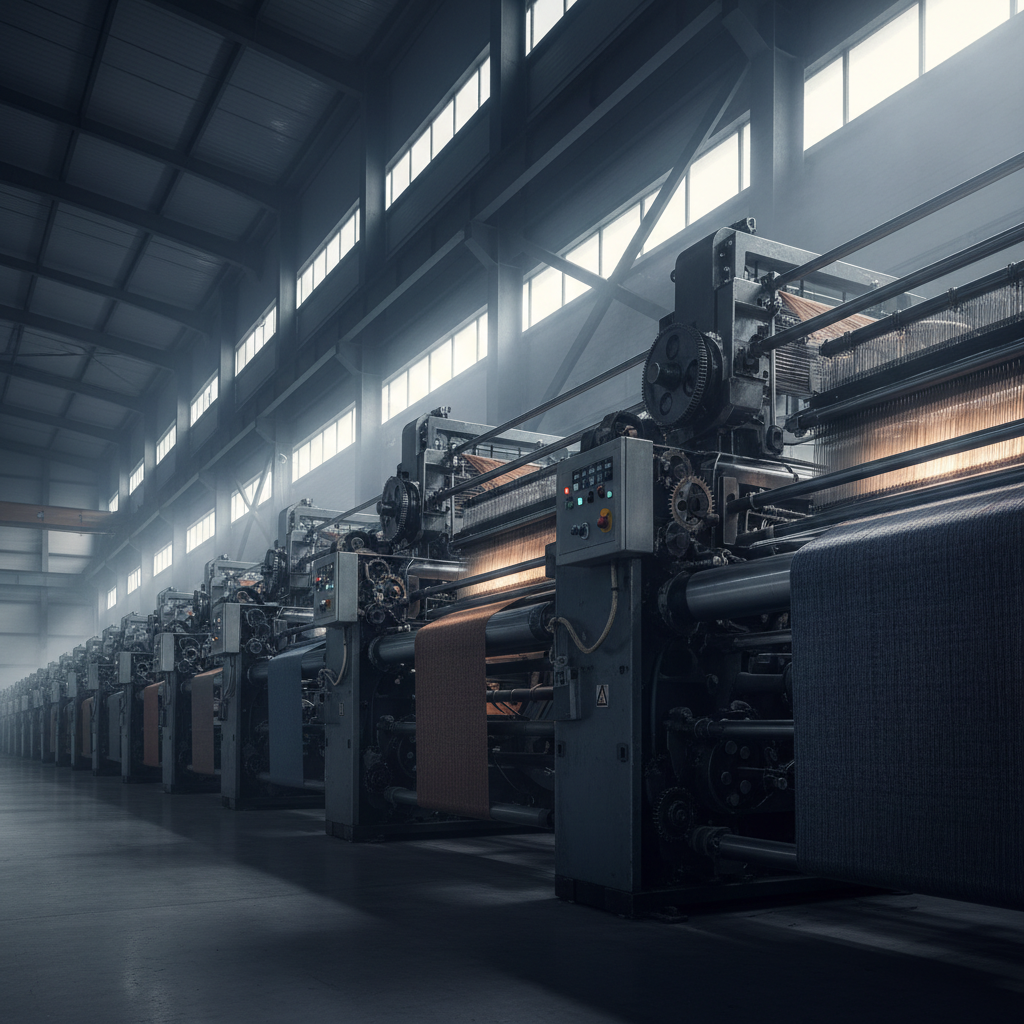
I was at a factory in Changzhou last month, and they were bragging about their new high-speed line. Looked great on paper. Then I watched it run for an hour. Constant stoppages, uneven weave… Turns out, the material feed was inconsistent. Small things like that can ruin an entire production run.
The Current Landscape of Fiberglass Mesh Production Line
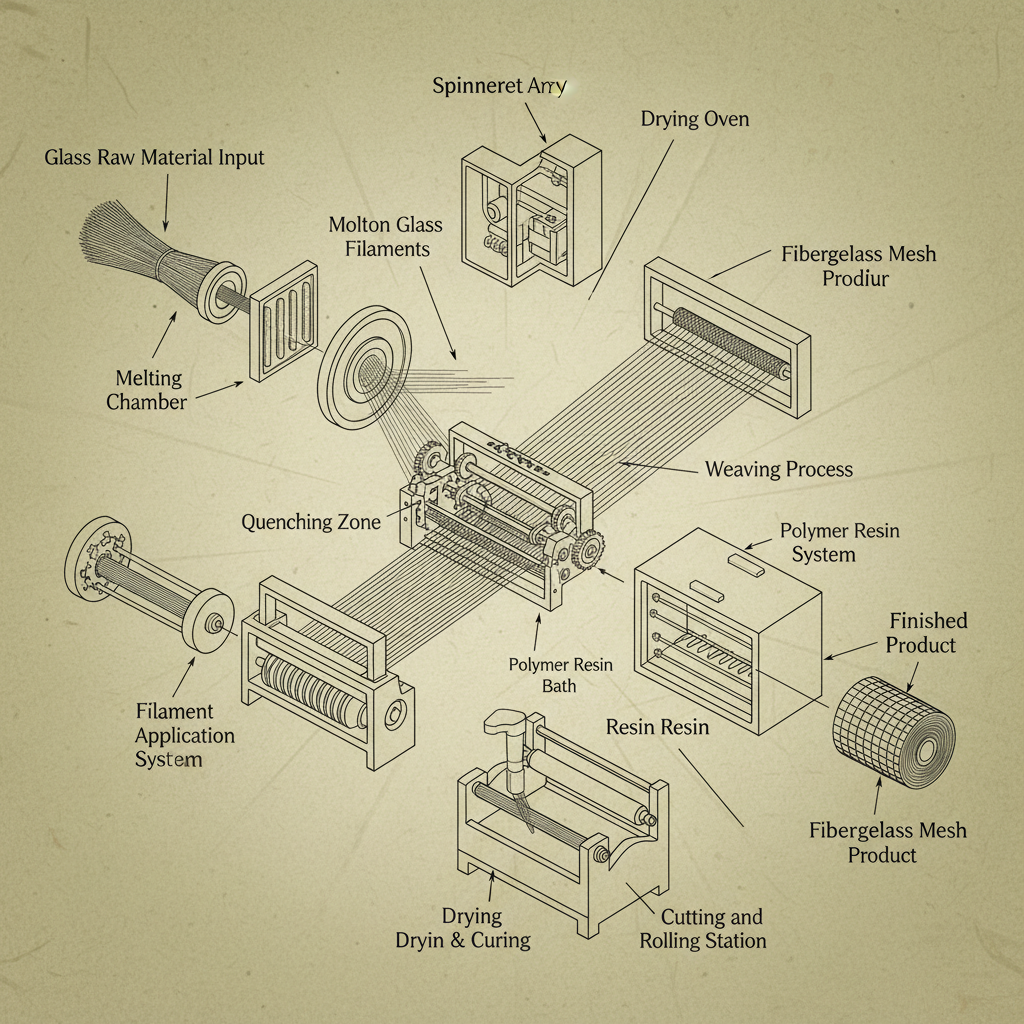
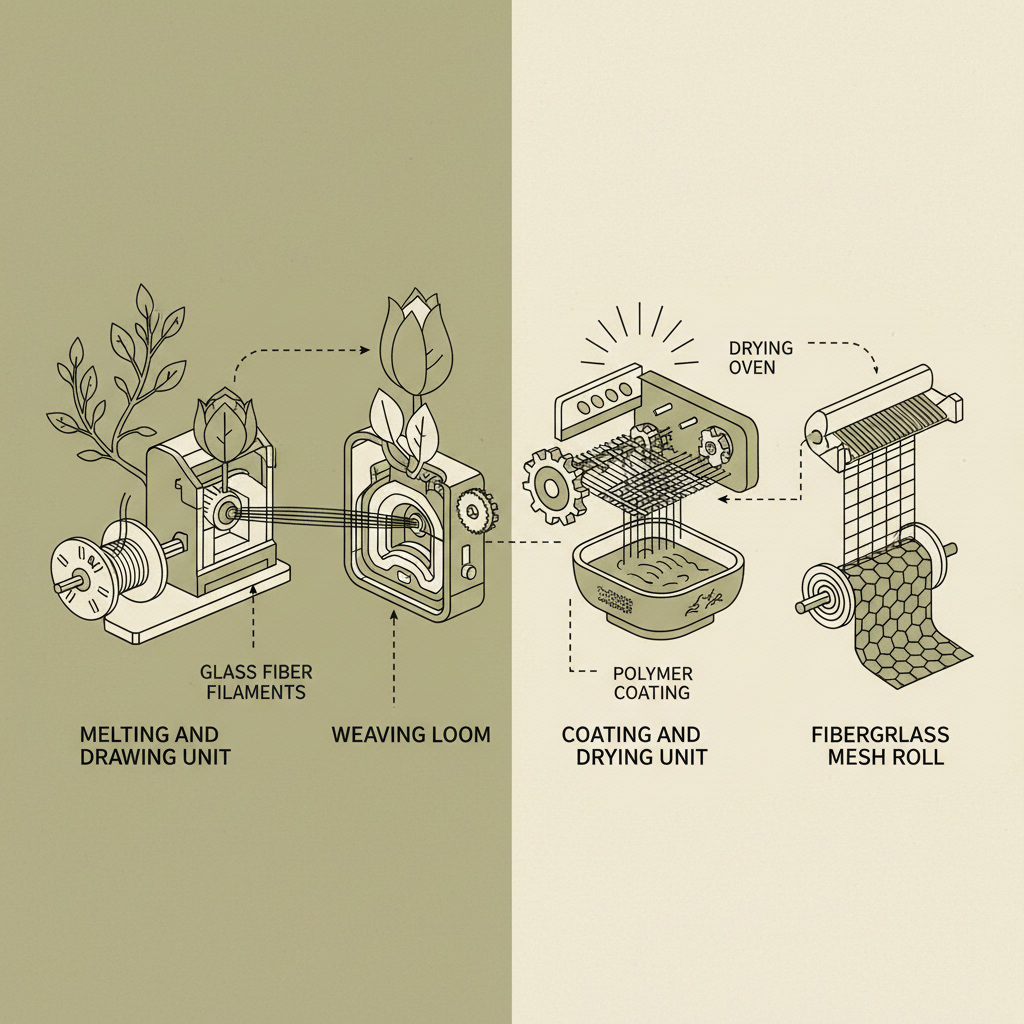
Honestly, the biggest shift I've seen isn't some fancy new material, it’s the demand for consistent quality at scale. Everybody wants it cheaper, faster, and better. Sounds familiar, right? The pressure's on manufacturers to streamline processes. We’re talking about integrated systems – from glass fiber formation to weaving, coating, and finishing. The whole shebang.
And it’s not just construction anymore. Automotive, aerospace, even medical applications are driving demand for increasingly sophisticated fiberglass mesh production line. They need specific properties, tight tolerances. It’s a whole different ballgame than just making mesh for patching drywall.
Common Pitfalls in Fiberglass Mesh Production Line Design
Strangely enough, a lot of folks get hung up on the weaving pattern itself, trying to be too clever. Complex patterns look good in a CAD drawing, but they’re a nightmare to manufacture consistently. Keep it simple. Focus on reliable tension control and consistent material feed. That’s where you win.
Another big one? Ignoring the coating process. The resin is crucial. Not all resins are created equal. Some are brittle, some are flexible, some have poor UV resistance. Choosing the right resin for the application is half the battle. I encountered this at a factory in Ningbo last time - they used a cheap resin to save a few pennies, and the mesh started cracking within weeks.
And don’t even get me started on the quality of the glass fibers themselves. If they’re not consistent, you're fighting a losing battle. You'll get weak spots, uneven weaves, and a whole lot of headaches.
Materials: A Hands-On Perspective
The glass fibers themselves...you can tell a good bunch just by feel. They should be smooth, consistent, and not brittle. The smell is subtle, kind of like... clean dust, if that makes sense. You get a whiff of something chemical, it’s probably not good.
Resin, now that's a different beast. You’ve got your polyesters, your vinyl esters, your epoxies. Polyesters are cheap and good for general use, but they lack the strength and chemical resistance of the others. Vinyl esters are a step up, offering better corrosion resistance. Epoxies are the top of the line, but they’re expensive and can be tricky to work with. You’ve gotta get the mix ratio just right, otherwise it won’t cure properly. I've seen guys ruin entire batches because they didn’t measure correctly.
And let’s not forget the sizing agents. These are applied to the glass fibers to protect them during handling and improve their adhesion to the resin. They’re often overlooked, but they can have a significant impact on the final product’s performance. I once spent a week trying to figure out why a batch of mesh was failing adhesion tests, only to discover the sizing agent had been contaminated.
Real-World Testing and Quality Control
Lab tests are fine, I guess. Tensile strength, elongation, all that stuff. But honestly, I trust a good old-fashioned stress test more. Grab a piece of mesh, bend it, twist it, pull on it. If it feels flimsy, it is flimsy. It’s about feel, intuition. You develop it after years of working with the stuff.
We do a lot of simulated weathering tests, exposing the mesh to UV radiation, humidity, and temperature extremes. We leave it out in the sun for months, drench it in water, freeze it solid. If it can survive that, it’ll probably survive real-world conditions.
Fiberglass Mesh Production Line Quality Control Metrics
How Users Actually Utilize Fiberglass Mesh Production Line
You know, people use this stuff in ways you'd never imagine. We designed it for reinforcing concrete, but we’ve had customers using it for everything from boat hulls to artistic sculptures. One guy in Florida built a whole koi pond liner out of it!
Anyway, I think the biggest use is still in construction – drywall joint compound, plaster, roofing. It adds strength, prevents cracking, and makes everything last longer. It's not glamorous, but it gets the job done.
The Benefits and Drawbacks: A Pragmatic View
The benefits are pretty clear: high strength-to-weight ratio, corrosion resistance, dimensional stability. It’s a durable material, no doubt about it. But it’s not perfect. It can be brittle if not handled properly, and it’s susceptible to alkali attack in some environments.
It's also surprisingly expensive. The raw materials aren’t cheap, and the manufacturing process is energy-intensive. We’re constantly looking for ways to reduce costs and improve efficiency, but it’s a challenge.
And let's be real: it's itchy. Working with fiberglass without proper protection is a recipe for a rash.
Customization and Specific Applications
We can do a lot with customization. Different weave patterns, different resin types, different coating thicknesses. I had a customer last month, a small boss in Shenzhen who makes smart home devices. He insisted on changing the interface to , and the result was a nightmare. Increased production costs by 20%, and the benefit was… minimal. Turns out, his existing equipment couldn’t handle the smaller connector. Lesson learned: don’t change things just for the sake of change.
We also offer custom sizing. Some applications require very specific mesh dimensions. We can cut it to size, fold it, even package it individually. It adds to the cost, but it saves the customer time and effort.
The biggest demand for customization right now is in the automotive industry. They need mesh with specific properties for composite body panels and structural components. It’s a challenging market, but it’s also a high-growth market.
Fiberglass Mesh Production Line: Key Customization Parameters
| Parameter |
Description |
Typical Range |
Impact on Performance |
| Aperture Size |
The size of the openings in the mesh. |
1mm - 10mm |
Affects crack resistance and resin penetration. |
| Mesh Weight (gsm) |
The weight of the mesh per unit area. |
30gsm - 300gsm |
Determines the strength and durability of the mesh. |
| Resin Type |
The type of resin used to coat the mesh. |
Polyester, Vinyl Ester, Epoxy |
Influences chemical resistance, UV stability, and adhesion. |
| Coating Thickness |
The thickness of the resin coating. |
10μm - 100μm |
Provides protection against environmental factors and improves adhesion. |
| Weave Pattern |
The arrangement of the glass fibers in the mesh. |
Plain, Twill, Satin |
Affects the drapeability and flexibility of the mesh. |
| Width |
The width of the mesh roll. |
50mm - 3000mm |
Determines the ease of handling and application. |
FAQS
Honestly? Not prepping the surface properly. You gotta remove all the loose material, clean it thoroughly, and apply a bonding agent. If you don’t, the mesh won’t adhere, and the repair will fail. It’s basic stuff, but you'd be surprised how many people skip that step. Proper preparation is 90% of the job, trust me.
That depends on the load and the expected stresses. For light-duty repairs, a lower weight mesh is fine. But for structural repairs or areas subject to heavy loads, you’ll need a heavier mesh. It's all about calculating the forces involved and selecting a mesh that can handle them. If you’re unsure, it’s always better to err on the side of caution and go with a heavier weight.
Fiberglass itself doesn’t support mold growth, but the resin coating can. Some resins are more susceptible to mold than others. If you’re using mesh in a damp or humid environment, you’ll want to choose a resin with mold inhibitors. And make sure to properly ventilate the area to prevent moisture buildup.
It varies depending on the environment, the quality of the materials, and the installation. But a properly installed mesh can last for 10-20 years or even longer. UV exposure is the biggest enemy, so it’s important to choose a resin with good UV resistance. Regular inspections can also help you identify and address any potential problems early on.
Yes, you can. But you’ll need to use a paint that’s compatible with the resin. Acrylic paints generally work well. Make sure the mesh is clean and dry before painting. And apply multiple thin coats rather than one thick coat.
Wear a dust mask, gloves, and eye protection. Fiberglass fibers can irritate your skin and lungs. Work in a well-ventilated area. And avoid creating dust. It’s not the end of the world if you get a little fiber on you, but you don’t want to breathe it in or get it in your eyes.
Conclusion
So, fiberglass mesh production line… it’s more than just weaving glass fibers together. It’s about understanding materials, controlling processes, and adapting to ever-changing demands. It’s about knowing when to push the limits and when to play it safe. It's a lot of little details that add up to a big difference.
Ultimately, whether this thing works or not, the worker will know the moment he tightens the screw. That’s the real test. And if he has to redo it, well, you know you’ve got a problem. That's why you need a reliable fiberglass mesh production line.